Dive Sites in Roatan: Reefs, Walls & Wrecks
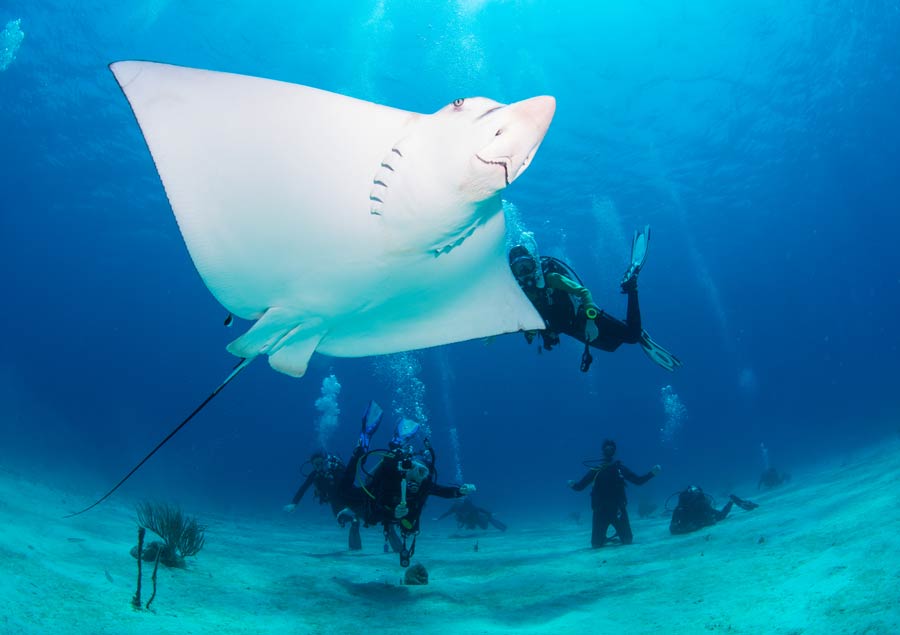
Roatan offers an incredible variety of underwater landscapes, from colorful coral gardens and dramatic walls to wrecks, canyons and fascinating underwater formations.

Explore the island's different diving regions and discover what makes each one unique, with insights from our firsthand experience diving around Roatan.

Diving Around Roatan: Different Coasts, Different Experiences

Roatan offers a remarkable variety of diving, with walls, canyons, sandy areas, coral reefs and wrecks to explore, many accessible within recreational depths of 100 feet (30 meters).

While the western part of the island attracts the most divers, we mainly explore the quieter northern reefs, away from the busiest areas. We can also venture farther east or explore the south shore, offering different underwater landscapes and experiences depending on conditions.

Diving Roatan's North Shore

Roatan's north shore offers beautiful coral reefs, dramatic walls, swim-throughs but not many sandy areas, often with considerably less boat traffic than the island's busiest western dive sites.

This is where Scuba Nomad does most of its diving. From our base, we can reach a variety of reefs in just a few minutes, allowing us to explore different underwater environments while keeping our diving experience relaxed and personal.

LAND OF GIANTS
Land of Giants is one of Roatan's most impressive dive sites. At around 30 m (100 ft), enormous coral formations rise from sandy patches, creating a rich habitat for marine life. Nitrox divers may have more time to explore these coral giants and the surrounding sandy bottom, depending on their dive plan. Nearby, a spectacular wall rises from approximately 25 m (82 ft) toward the surface, with large cracks to explore as you ascend. Best of all, boat traffic is usually minimal, making this an exceptionally peaceful dive.
KEY HOLE
Key Hole is a fascinating network of cracks and grooves cutting through the reef wall, forming an impressive channel approximately 100 m (330 ft) long. On days with good visibility, its intricate formations are spectacular. However, ocean water mixing with lagoon water often creates a cloudy green atmosphere, giving the dive an eerie, mysterious feel. Entering the channel at around 10 m (30 ft), you can explore galleries and swim-throughs while looking for Banded Coral Shrimp, Lettuce Sea Slugs and Green Moray Eels. Beyond the channel, the outer wall reveals a dramatic sandy drop-off. The route is equally rewarding in reverse. As you navigate the channel, remember to look upward: at one point, the opening above forms the unmistakable keyhole shape that gives this dive site its name. Nearby, a spectacular wall rises from approximately 25 m (82 ft) toward the surface, with large cracks to explore as you ascend. Best of all, boat traffic is usually minimal, making this an exceptionally peaceful dive.

Diving Western Roatan

West End and West Bay are Roatan's busiest diving areas, with the island's highest concentration of dive centers and more than 50 dive sites within short boat rides. The extensive reef system offers drift dives, walls, canyons and swim-throughs.

Shallow sandy patches are common and particularly interesting for macro photography, with Garden Eels, Lined Soles and Sailfin Blennies among the creatures to look for.

HOLE IN THE WALL
Hole in the Wall begins with a descent through a sandy channel that transforms into a tunnel at around 18 m (60 ft), cutting through the coral wall before opening into the deep blue at 30 m (100 ft). Good buoyancy control is essential, as the wall drops dramatically into the depths. Schools of jacks sometimes circle in the blue, while turtles may emerge from deeper water. Looking back and upward reveals an immense reef wall rising toward the surface, a breathtaking sight. The dive can then continue through **Swiss Cheese**, a maze of caves, passageways and canyons at depths shallower than 10 m (33 ft), providing a fascinating contrast to the deep wall.
WEST END WALL
West End Wall offers a spectacular drift dive along a dramatic drop-off, with breathtaking views into the deep blue. The reef crest is rich in marine life, making it equally rewarding to explore at shallower depths. The dive can finish at Texas, a plateau near the end of the wall. Schools of Eagle Rays, sometimes numbering up to ten individuals, have become a frequent highlight. Snappers, barracudas and Horse-eye Jacks are also commonly seen, while occasional encounters with larger pelagic species, including Hammerhead Sharks and Manta Rays, add to the excitement.

Diving Sandy Bay

Moving east from West End, Sandy Bay offers quieter diving areas with fewer boats and increasingly dramatic underwater topography. Walls covered in soft corals are crossed by deep cracks and channels, creating fascinating routes to explore. Bring your adventurous spirit and a dive light to discover formations such as Spooky Channel, Morat Channel and Bear's Den, a beautiful cavern known for its spectacular interplay of light and shadow.

Sandy Bay is also home to Roatan's two largest wrecks, El Aguila and the Odyssey. Both were intentionally sunk on sandy bottoms at depths of around 30 m (100–110 ft), offering exciting exploration opportunities for advanced divers.

ZACK'S PATCH
At around 10 m (30 ft), Zack's Patch reveals a fascinating geological formation resembling an ancient waterfall, dating back to a time when this area was above sea level. Exploring its two sides, look for Spotted Drums, colorful nudibranchs and perhaps a grouper visiting a cleaning station with its enormous mouth wide open. Leaving the formation with the reef on your right, the wall rises toward the surface while the seabed drops far beyond recreational diving depths. On days with good visibility, you might even spot a Roughtail Stingray resting on the sandy bottom below. Farther along the wall, the reef opens into a shallower inner area where shy toadfish sometimes hide in their holes, disappearing as soon as they sense your presence.
THE ODYSSEY
The Odyssey was intentionally sunk in 2002 on a sandy bottom at approximately 33 m (110 ft), creating an artificial reef for corals, sponges and other marine life to colonize. Stretching 90 m (300 ft), this impressive wreck is best explored with a carefully planned dive. Nitrox may offer additional bottom time, depending on the gas mixture and depth limits, allowing divers to appreciate both the stern and bow. The wreck's sections lean to starboard, creating a disorienting perspective when exploring the interior. **Penetration should only be attempted with appropriate wreck-diving training, equipment and guidance.** Alternatively, enjoy the ship's impressive silhouette from the outside, swimming from stern to bow before gradually ascending the nearby reef wall. The dive finishes among extensive fields of soft corals, where an occasional grouper may be hiding.

Diving Roatan's South Shore

On clear days, Roatan's south shore offers spectacular views of the mountains on the Honduran mainland. However, its exposure to easterly trade winds often makes boat navigation challenging, limiting diving opportunities throughout the year.

Here, reef walls begin remarkably close to shore, dropping dramatically from depths as shallow as 6 m (20 ft). Deep sandy ravines create striking underwater landscapes, while the shallower reefs reveal an extraordinary variety of corals and colorful sponges. 

On calm days, we can also explore Cordelia Banks, known for its extensive fields of staghorn coral. The south shore is home to some of Roatan's best-known dive sites, including the Prince Albert and Mr. Bud wrecks and the famous Mary's Place.

MARY'S PLACE
Mary’s Place is probably the most famous dive site in Roatan. Named after the wife of one of the site’s discoverers, it is known for two dramatic cracks that slice vertically through the reef crest to depths of nearly 40 m (132 ft), where the sandy bottom continues descending into the blue. About 3 m (10 ft) wide, these crevices are lined with spectacular soft corals, creating an unforgettable swim-through experience. Inside, you may spot Black Coral, Sea Rods and Whips in a remarkable variety of colors. Outside the cracks, large barrel sponges and corals create busy cleaning stations, while the wall attracts abundant fish life, including long formations of Creole Wrasse and circling schools of Horse-eye Jacks. Mary’s Place is generally considered a more advanced dive. It is also a beautiful place to snorkel and appreciate the dramatic reef scenery from the surface.
CALVIN'S CRACK
Located off Jonesville, in the municipality of Santos Guardiola, Calvin's Crack is the most remote dive site featured in our guide. Its dramatic reef formations resemble those of Mary's Place, with deep cracks shaped by the island's geological history. The dive begins at around 10 m (30 ft), gradually descending through impressive grooves and coral-lined passages before reaching the outer wall at approximately 27 m (90 ft). Schools of Silversides often fill the crevices, adding movement and shimmer to the underwater scenery. Once outside, the current may carry you along the wall toward a second, shorter crevice. Depending on conditions, the dive can finish with an exploration of the reef plateau above.

How Do We Choose Our Dive Sites?

Some of Roatan's most rewarding dive sites are also among its least explored. Right in front of our operational base on the north shore, we have access to beautiful reefs, dramatic walls and fascinating underwater landscapes that remain largely unknown to most visiting divers.

These quieter sites are our first choice for daily diving, offering excellent experiences away from the busiest areas of the island.

For those interested in exploring farther afield, we can also organize diving trips to Western Roatan, Sandy Bay and the South Shore upon request, depending on sea conditions and availability.


Prefer to See Our Diving Options? Explore Certified Diving →

Ready to Explore Roatan's Dive Sites?

Discover the quieter side of Roatan's underwater world with Scuba Nomad. From our beautiful northern reefs to special trips around the island, we'll help you find the diving experiences that match your interests.

Tell us when you'd like to dive, and let's plan your next underwater adventure.